Tuesday, October 14, 2014
NEW SPELLING GAME!
Here is a new Spelling game! Go to SPELLERZ . Choose "Custom Invasion" and enter this code: CNE658 to practice Sort 10. Each week, I will create a new list with a new code. You may print your results for homework credit if the assignment is "Online Practice." Have fun!

Friday, October 10, 2014
GOING BATTY IN OCTOBER!

What a great October week it has been! Did you see the blood moon and the lunar eclipse? Did your child tell you about something new he or she learned this week? It was fun to see the kids' handsome faces in their school pictures which were delivered. Students who did not order pictures received a catalog from which you may place orders now.

FRIDAY, OCTOBER 17
5:00 UNTIL 8:00
WRIST BANDS $10 EACH
FREE SHUTTLE SERVICE FROM HOLY TRINITY
GAMES, PRIZES, DJ, FOOD, BAKE SALE, VENDOR FAIR, BOUNCE HOUSES, PHOTO BOOTH, DUNK TANK (additional fee)
Parents must be present with children -- no drop offs, please,

25 CONFERENCES ARE SCHEDULED FOR NEXT WEEK!
Please bring your child with you. I know that you will be impressed with all that he or she has to share. Please arrive on time as we have a very full schedule.

We learned about factors, multiples, rules of divisibility, prime, and composite numbers this week. We are able to decompose numbers to find the prime factors. We played a couple of games to practice the Rules of Divisibility. The students enjoyed the games so much that I promised to put them on the blog! Access the Divisibility Rules powerpoint at star.spsk12.net/math/5/DivisabilityRules.ppt. The practice games are embedded in the lesson and there is an additional game at the end of the powerpoint. Next week we will work on multiplying multi-digit numbers. Yes, it is so much easier when you truly know the basic multiplication facts! Please continue to expect your child to practice daily!
I have added websites for practicing basic addition and subtraction facts to our "Links for Learning" that will help students become more efficient with simple facts. Let's try to stop using our fingers for addition and subtraction this year!
I have added websites for practicing basic addition and subtraction facts to our "Links for Learning" that will help students become more efficient with simple facts. Let's try to stop using our fingers for addition and subtraction this year!

Writing is an art that requires skill. We are sharpening our skills and applying them in our writing. This week we focused on writing good topic sentences and developing paragraphs from a given set of details on a topic. This will lead into gathering our own details as we research our Native American tribes, organizing our subtopics, and writing our informational pieces about our assigned tribes.

Here is a very good slide show that introduces the Native American tribes we are studying: http://secure.smilebox.com/ecom/openTheBox?sendevent=4e4445794f546b784e44593d0d0a&blogview=true&campaign=blog_instructions_directurl_makeyourown
Social Studies Native American projects are due October 29. The students are so excited to learn about America's early cultures. We will be writing our reports in class but information gathered from home is certainly welcome. There are links on Addison's website to help with research. I'm beginning to hear some very creative ideas! Parents, thank you for your support.
Social Studies Native American projects are due October 29. The students are so excited to learn about America's early cultures. We will be writing our reports in class but information gathered from home is certainly welcome. There are links on Addison's website to help with research. I'm beginning to hear some very creative ideas! Parents, thank you for your support.

Today in the Science Lab, we made six weather instruments. Each group of four or five students was led by a volunteer. Mrs. O'Donnell who has a kindergarten student at Addison and a seventh grader, helped us make a wind vane. Mr. Reece assisted our class again, helping us build an anemometer. Mrs. Paine instructed us as we made a hygrometer, Mrs. Brown was the barometer expert, and Mrs. Hernandez knew just what to do to make a rain gauge! Mr. and Mrs. Eid were there to help the group that made a thermometer. After all the instruments were created, each group presented and gave a demonstration of how their instrument works. Every instrument worked and we were so proud! We are so appreciative of our volunteers and Mrs. Knobbe!

Saturday, October 4, 2014
HEY Y'ALL, IT'S FALL!


CONFERENCE WEEK
OCTOBER 20 - 24
OCTOBER 20 - 24
Early Dismissal 12:15
Conference notices will be sent home on Monday. Please respond as quickly as possible. Your child and I look forward to sharing his or her accomplishments with you.
Book Fair and Red Ribbon Week are the same week!

READING: Students have been enrolled in two online programs that will help them work on their reading skills. They can access Study Island and Raz-Kids from the Addison webpage with the username and password I have given them for each site. Raz-Kids will be self-paced for each student at his or her differentiated level. We will be learning how to use Study Island to complete specific assignments soon.
SPELLING: I have created a customized page for our class on the website, Spelling City. Simply go to http://www.spellingcity.com/leaders306/. You will be able to select the current week’s word sort and play a variety of fun games to practice. You can take a test and print your results or even a nice certificate! You may show me either one of those items to count for your Trial Test homework! You will still need to write the words you misspelled three times.
MATH: Why did the boy eat his math homework? Because the teacher told him it was a piece of cake! Indeed, Math is a piece of cake when we can recall the multiplication facts with ease. Does your child regularly practice the facts? Have you tried the websites on my blog? These two websites are especially good ones for increasing fluency:
Online Timed Facts: http://www.mrmyers.org/Math_Mania/ttmult.html and
Math Expressions: http://www.playkidsgames.com/games/mathfact/mathFact.htm.
We are beginning to multiply larger numbers and will use strategies that will make it as easy as pie – IF we are fluent with X Facts!
GRAMMAR: Learning the parts of speech is an important step in understanding word meaning, word function, and proper English grammar. In fact, the Common Core State Standards require that as early as second grade, students will demonstrate command of all eight parts of speech, and that as students grow, their understanding and use of words will become more sophisticated each year (SpellingCity.com). We are constantly reviewing parts speech and proper English grammar, usage, and mechanics. We strive to apply all that we learn in all that we speak and write. The Grammar Gorillas at http://www.funbrain.com/grammar/ can make practice fun! Practice punctuation, sentence structure, and more at http://www.funenglishgames.com/grammargames.html.
SOCIAL STUDIES: We are embarking on a journey into history. We will learn about six Native American tribes: Inuit, Kwakiutl, Nez Perce, Pawnee, Hopi, and Seminole. Your child will become an expert as he or she researches and completes an at-home project to represent his or her assigned tribe. There are great resources that can be accessed through Cobb Digital Library via the Addison webpage. Thank you for supporting your child while letting his or her creativity show.MATH: Why did the boy eat his math homework? Because the teacher told him it was a piece of cake! Indeed, Math is a piece of cake when we can recall the multiplication facts with ease. Does your child regularly practice the facts? Have you tried the websites on my blog? These two websites are especially good ones for increasing fluency:
Online Timed Facts: http://www.mrmyers.org/Math_Mania/ttmult.html and
Math Expressions: http://www.playkidsgames.com/games/mathfact/mathFact.htm.
We are beginning to multiply larger numbers and will use strategies that will make it as easy as pie – IF we are fluent with X Facts!
GRAMMAR: Learning the parts of speech is an important step in understanding word meaning, word function, and proper English grammar. In fact, the Common Core State Standards require that as early as second grade, students will demonstrate command of all eight parts of speech, and that as students grow, their understanding and use of words will become more sophisticated each year (SpellingCity.com). We are constantly reviewing parts speech and proper English grammar, usage, and mechanics. We strive to apply all that we learn in all that we speak and write. The Grammar Gorillas at http://www.funbrain.com/grammar/ can make practice fun! Practice punctuation, sentence structure, and more at http://www.funenglishgames.com/grammargames.html.

Friday, September 26, 2014
AWESOME AUTUMN!
Fall is in the air! The weather has been so
nice lately and I hope you all will have a chance to enjoy some of the fun
activities that come with Fall. As the weather becomes cooler, please remind
your students to bring their jackets as we go to recess around 10:30 each
morning. Unfortunately, cold and flu season has also arrived and we are going
through a lot of tissues! Hand washing is vital to staying healthy.
Congratulations to Caleigh and Sadie! They were selected
to serve on the Lighthouse Committee to promote “Leader in Me” principles and
practices in our school. We are proud of their leadership.
Congratulations to Ben! Our class elected him to
represent us as a member of the Student Leadership Team. Tatum was elected as
the alternate. She will be there to serve in Ben’s absence when necessary. We
know they will both do a great job!
Congratulations to Maggie! She was selected by her classmates as our "Leader of the Month," for practicing the 7 Habits and for leading by example! We will be proud to see her featured on the new wall display in the school lobby.
Congratulations to Maggie! She was selected by her classmates as our "Leader of the Month," for practicing the 7 Habits and for leading by example! We will be proud to see her featured on the new wall display in the school lobby.
MATH: Our work on
addition and subtraction of whole numbers has been quite successful for most
but challenging for others. We have assessed our skills but will revisit
addition and subtraction, will have another test in the near future, and will
apply the skills often in our Math work, especially in solving word problems. We
started multiplication and division this week and have practiced using
vocabulary and strategies that will help us as we move forward during the next
few weeks. Fact families are so important, so please practice those X facts
daily! Remember, there are many ways to do that – websites on this blog, flash
cards, writing the facts, and playing games with friends and family.
Standards:
MCC4.OA.1
Interpret a multiplication equation as a comparison, e.g.,interpret 35 = 5 × 7
as a statement that 35 is 5 times as many as 7 and 7 times as many as 5.
Represent verbal statements of multiplicative comparisons as multiplication
equations.
MCC4.OA.2 Multiply or divide
to solve word problems involving multiplicative comparison, e.g., by using
drawings and equations with a symbol for the unknown number to represent the
problem, distinguishing multiplicative comparison from additive comparison.
MCC4.OA.4 Find all factor pairs for a whole number in the range 1–100. Recognize that a whole number is a multiple of each of its factors. Determine whether a given whole number in the range 1–100 is a multiple of a given one-digit number. Determine whether a given whole number in the range 1–100 is prime or composite.
MCC4.NBT.5 Multiply a whole number of up to four digits by a one-digit whole number, and multiply two two-digit numbers, using strategies based on place value and the properties of operations. Illustrate and explain the calculation by using equations, rectangular arrays, and/or area models.
MCC4.OA.4 Find all factor pairs for a whole number in the range 1–100. Recognize that a whole number is a multiple of each of its factors. Determine whether a given whole number in the range 1–100 is a multiple of a given one-digit number. Determine whether a given whole number in the range 1–100 is prime or composite.
MCC4.NBT.5 Multiply a whole number of up to four digits by a one-digit whole number, and multiply two two-digit numbers, using strategies based on place value and the properties of operations. Illustrate and explain the calculation by using equations, rectangular arrays, and/or area models.
SCIENCE: Our study of weather and climate will continue. Today we went to the Science Lab to learn more about warm and cold fronts and how
they affect weather conditions. We were glad to have our volunteers, Mrs. Brown, Mrs. Hernandez, and Mrs. Sivley there to
help us. Another volunteer, Mr. Reece joined us in the Science Lab. He is the father of a first grader and a member of the FBI (Fathers Being Involved). Thanks for helping us learn!
Question: What is the Difference between Weather and Climate?
Question: What is the Difference between Weather and Climate?
Answer: The difference between weather and climate is easy! Every
day when you climb out of bed, you must plan your day around the weather. Rain
or snow, hot or cold, humid or dry, your daily events will likely be affected
by the current weather conditions. In fact, even with a five day forecast, you
are likely to still look out the window to see what the weather is doing. Therefore, Weather changes on a daily basis.
In general, if you live in Alaska,
your closet is not likely to be full of beach attire and flip flops. Similarly,
it is doubtful that a store selling wool mittens and triple layer winter coats
will be very successful in Florida. Therefore, Climate is
determined by the trends in weather patterns over an extended period of time.
Not days, or weeks, or months but years.
Climate Data Comes from Weather
Data
Scientists keep day-to-day weather statistics for 30 years in order to draw conclusions about local and regional climates. It is only when a location has 30 years of weather statistics that meteorologists can describe the climate of a particular area. Overall,, the difference between weather and climate is time. Weather happens daily and climate happens over longer periods.
Scientists keep day-to-day weather statistics for 30 years in order to draw conclusions about local and regional climates. It is only when a location has 30 years of weather statistics that meteorologists can describe the climate of a particular area. Overall,, the difference between weather and climate is time. Weather happens daily and climate happens over longer periods.
Standards:
S4E4.
Students will analyze weather charts/maps and collect weather data to predict
weather events and infer patterns and seasonal changes.
a. Identify
weather instruments and explain how each is used in gathering weather data and
making forecasts (thermometer, rain gauge, barometer, wind vane, anemometer).
b. Using a
weather map, identify the fronts, temperature, and precipitation and use the
information to interpret the weather conditions.
c. Use
observations and records of weather conditions to predict weather patterns
throughout the year.
d.
Differentiate between weather and climate.
SOCIAL STUDIES: We have completed our study of Maps and
Globes and have acquired skills that we will apply throughout the year as we
study the history and development of America. We will begin to learn about some
of America’s first peoples and how each group survived in and interacted with
their particular environments.
Standards:
Historical
Understandings SS4H1 The student will describe how early Native American
cultures developed in North America.
a.
Locate where Native Americans settled with emphasis on the Arctic (Inuit),
Northwest (Kwakiutl), Plateau (Nez Perce), Southwest (Hopi), Plains (Pawnee),
and Southeast (Seminole).
b. Describe how
Native Americans used their environment to obtain food, clothing, and shelter.
Geographic Understandings
Geographic Understandings
SS4G2 The
student will describe how physical systems affect human systems.
a. Explain why
each of the Native American groups (SS4H1a) occupied the areas they did, with
emphasis on why some developed permanent villages and others did not.
SPELLING: Sort 8
will focus on words that contain “r-influenced a in accented syllables.” (spelling
patterns –ar, -are, -air)
Parents, the “trial
test” homework assignment seems to be making a difference J. When those misspelled words are
identified early, students can focus on them. Go to the website, Spelling City,
from the Spelling Practice page on this blog, to type in those troublesome
words and practice, practice, practice! Parents, thank you for helping and
encouraging your children to become better spellers!

Sunday, September 21, 2014
EVERY CHILD. EVERY PARENT. EVERY DAY.
DID YOUR CHILD MEET THE ADDISON FALL BREAK READING CHALLENGE? DON'T FORGET TO SIGN AND RETURN THE READING LOG FOR A SPECIAL REWARD TO BE PRESENTED BY MRS. HALLMARK AND MR. COHEN.
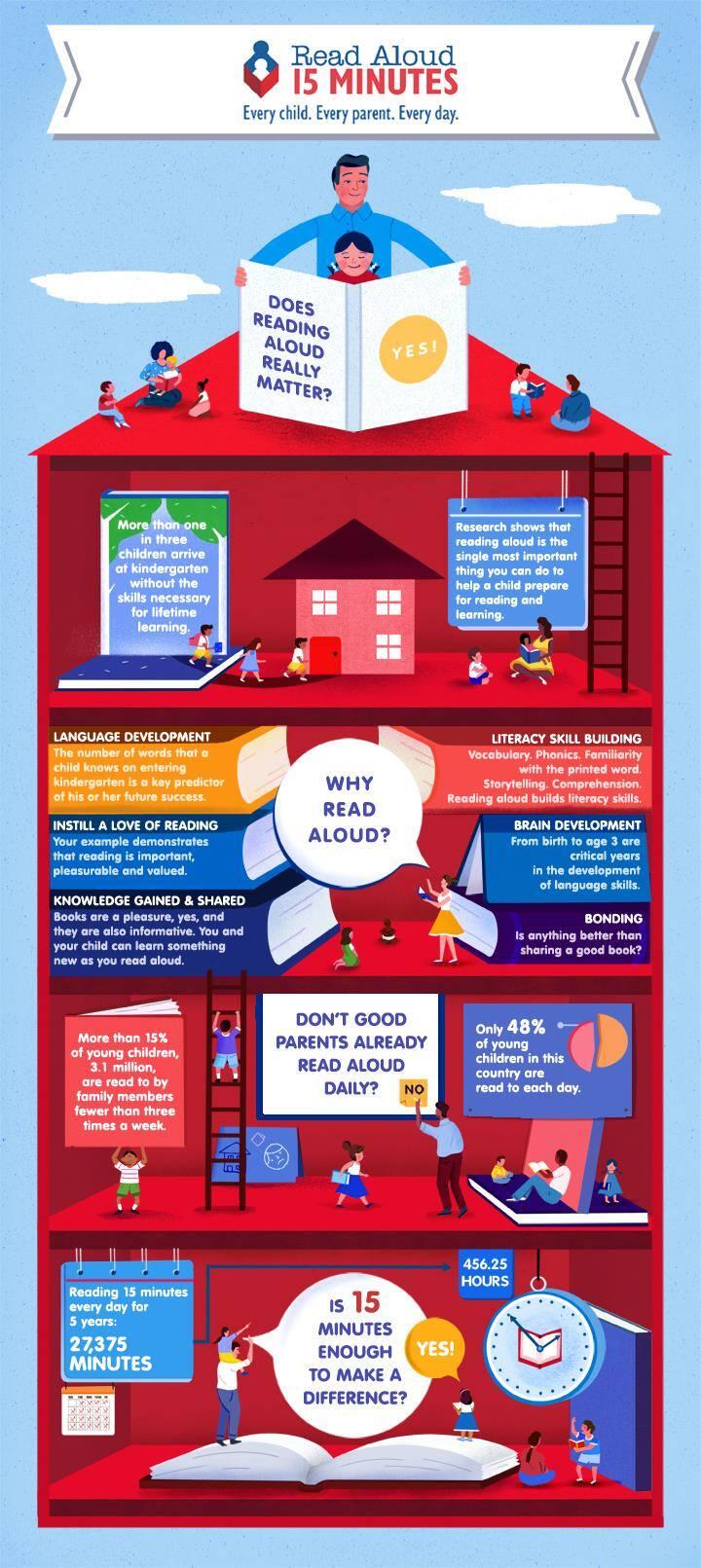
READERS ARE LEADERS!
Saturday, September 13, 2014
FALL BREAK IS IN VIEW!
Thank you all for making me feel so special! My birthday got off to a great start yesterday with all the beautiful cards, flowers, snacks, and gifts from my sweet thoughtful students! I appreciate each and every hug and wish. And we all get next week off to continue the celebration :) Enjoy Fall Break and some family fun!
When we return:
In Math, we will begin multiplication, so please have your kids brush up on multiplication facts 0-9. Try those great websites on the Math Practice page.
We will begin our Social Studies unit about America's first peoples as we concentrate on six Native American tribes: Inuit, Kwakiutl, Nez Perce, Hopi, Pawnee, and Seminole. We will learn about their cultures and the ways they lived in their various environments.
Weather will continue to be our focus of study in Science.
Please remind your girls and boys about Addison's Reading Challenge for Fall Break. Readers become Leaders!
When we return:
In Math, we will begin multiplication, so please have your kids brush up on multiplication facts 0-9. Try those great websites on the Math Practice page.
We will begin our Social Studies unit about America's first peoples as we concentrate on six Native American tribes: Inuit, Kwakiutl, Nez Perce, Hopi, Pawnee, and Seminole. We will learn about their cultures and the ways they lived in their various environments.
Weather will continue to be our focus of study in Science.
Please remind your girls and boys about Addison's Reading Challenge for Fall Break. Readers become Leaders!
Sunday, September 7, 2014
SOME THINGS ABOUT SEPTEMBER
It is hard to believe that we are half way through the first
quarter of this school year. Progress reports, intended to give you a snapshot
of how your child is progressing in fourth grade, will be going home on
Thursday. Please keep in mind that these are preliminary grades and there is
time for improvement before the first report card.
SCHOOL PICTURES will be taken on Tuesday. All students will be
photographed for the yearbook regardless of whether or not you order prints.
FALL BREAK is just around the corner! Enjoy time with your
family September 15 - 19.
TAKE A PEEK AT NEXT WEEK:
MATH: Addition and subtraction
of large whole numbers will continue this week with special attention being
given to regrouping. We are showing every step to avoid careless mistakes. We
are applying our skills to solve word problems, being sure to label each number
as we set up the problems on paper. In class,
we enjoy our daily Number Talks. A Number Talk is a short, daily routine that
provides students meaningful ongoing practice with computation. A Number Talk
is a powerful tool for helping students develop computational fluency because
the expectation is that they will use number relationships and the structures
of numbers to add, subtract, multiply and divide. Parents, I encourage you to
engage your children in number talks, too. For example, on shopping trips, have
your child compare prices. If one pair of shoes costs $49 and another costs
$35, ask him or her to use mental math to figure out how much would be saved by
purchasing the less expensive pair of shoes. Then ask for an explanation of how
the answer was found . . . there are multiples ways of thinking!
LANGUAGE ARTS: During the month of
September, we will be tackling the grammar concepts of subject/predicate,
proper use of capitalization and punctuation, and skilled sentence and
paragraph construction. We will be writing narrative and informational pieces, applying
the grammar concepts we learn. We will work on organizing and developing our
writing while adding descriptive details to support our main ideas and adding
flavor to our work.
SCIENCE: Mark Twain once said, “Climate is what you expect, weather is what
you get.” Weather is the atmosphere at a given time and place. Climate
is the average weather of a particular region over a long period of time. Meteorologists
refer to climatic changes because of the current weather patterns. In
order to make an educated forecast, meteorologists must understand the uses and
operations of various weather instruments. Meteorologists not only predict the
weather, but also help keep you informed.
Weather
maps show information about fronts, temperatures, and precipitation in a
certain area. Fronts are the moving boundaries between two air
masses. Air masses contain the same temperature and humidity
throughout a specific section of the atmosphere. These air masses
create either cold or warm fronts. Cold fronts push cold air out and
under warm air creating a thunderstorm. Warm fronts push warm air
out and over cold air masses which create rain. Weather maps
indicate a number of atmospheric conditions ranging from types of precipitation
to temperature to fronts.
We have
studied the water cycle and had lots of fun learning about types of clouds and
how they are formed. Thanks go to Mrs. Hernandez, Mrs. Brown, and Mrs. Sivley
for helping us in the Science Lab with our shaving cream clouds! Our Volunteers
learned that learning can be very messy!
We are
ready to investigate weather and learn how forecasts are made. By the time we
finish our unit on weather,
STUDENTS
WILL KNOW:
· thermometers measure temperature
· rain gauges measure the amount of precipitation
· barometers measure atmospheric pressure
· wind vanes measure wind direction
· anemometers measure the speed and force of the wind
· thermometers measure temperature
· rain gauges measure the amount of precipitation
· barometers measure atmospheric pressure
· wind vanes measure wind direction
· anemometers measure the speed and force of the wind
STUDENTS
WILL BE ABLE TO:
· identify and use weather instruments
· read a weather map
· use data to predict weather patterns
· differentiate between climate and weather
· identify and use weather instruments
· read a weather map
· use data to predict weather patterns
· differentiate between climate and weather
You and your child can access our textbook online to review or preview any of our units of study. Go to https://www-k6.thinkcentral.com/content/hsp/science/hspscience/ga/gr4/se_9780153734168_/flashNavhigh.html?page=toc
SOCIAL STUDIES: You and your child have access to our textbook online. This site
provides many opportunities to practice vocabulary and work with interactive
maps. Login to http://eduplace.com/eservices. Students’ username
is… cobbstudent4 and the password is… password.
READING:
READING:

Parent
involvement in education is like the frosting on a cupcake, it makes it
complete and oh so sweet!
~ ~ Anonymous
~ ~ Anonymous
Subscribe to:
Posts (Atom)