Friday, September 26, 2014

AWESOME AUTUMN!

Fall is in the air! The weather has been so nice lately and I hope you all will have a chance to enjoy some of the fun activities that come with Fall. As the weather becomes cooler, please remind your students to bring their jackets as we go to recess around 10:30 each morning. Unfortunately, cold and flu season has also arrived and we are going through a lot of tissues! Hand washing is vital to staying healthy.   
Congratulations to Caleigh and Sadie! They were selected to serve on the Lighthouse Committee to promote “Leader in Me” principles and practices in our school. We are proud of their leadership.
Congratulations to Ben! Our class elected him to represent us as a member of the Student Leadership Team. Tatum was elected as the alternate. She will be there to serve in Ben’s absence when necessary. We know they will both do a great job!
Congratulations to Maggie! She was selected by her classmates as our "Leader of the Month,"  for practicing the 7 Habits and for leading by example! We will be proud to see her featured on the new wall display in the school lobby. 

MATH:  Our work on addition and subtraction of whole numbers has been quite successful for most but challenging for others. We have assessed our skills but will revisit addition and subtraction, will have another test in the near future, and will apply the skills often in our Math work, especially in solving word problems. We started multiplication and division this week and have practiced using vocabulary and strategies that will help us as we move forward during the next few weeks. Fact families are so important, so please practice those X facts daily! Remember, there are many ways to do that – websites on this blog, flash cards, writing the facts, and playing games with friends and family.
Standards: 
MCC4.OA.1 Interpret a multiplication equation as a comparison, e.g.,interpret 35 = 5 × 7 as a statement that 35 is 5 times as many as 7 and 7 times as many as 5. Represent verbal statements of multiplicative comparisons as multiplication equations.
MCC4.OA.2 Multiply or divide to solve word problems involving multiplicative comparison, e.g., by using drawings and equations with a symbol for the unknown number to represent the problem, distinguishing multiplicative comparison from additive comparison.
MCC4.OA.4 Find all factor pairs for a whole number in the range 1–100. Recognize that a whole number is a multiple of each of its factors. Determine whether a given whole number in the range 1–100 is a multiple of a given one-digit number. Determine whether a given whole number in the range 1–100 is prime or composite.
MCC4.NBT.5 Multiply a whole number of up to four digits by a one-digit whole number, and multiply two two-digit numbers, using strategies based on place value and the properties of operations. Illustrate and explain the calculation by using equations, rectangular arrays, and/or area models.                                           

SCIENCE: Our study of weather and climate will continue. Today we went to the Science Lab to learn more about warm and cold fronts and how they affect weather conditions. We were glad to have our volunteers, Mrs. Brown, Mrs. Hernandez, and Mrs. Sivley there to help us. Another volunteer, Mr. Reece joined us in the Science Lab. He is the father of a  first grader and a member of the FBI (Fathers Being Involved). Thanks for helping us learn!   
Question: What is the Difference between Weather and Climate?
Answer: The difference between weather and climate is easy! Every day when you climb out of bed, you must plan your day around the weather. Rain or snow, hot or cold, humid or dry, your daily events will likely be affected by the current weather conditions. In fact, even with a five day forecast, you are likely to still look out the window to see what the weather is doing. Therefore, Weather changes on a daily basis.
In general, if you live in Alaska, your closet is not likely to be full of beach attire and flip flops. Similarly, it is doubtful that a store selling wool mittens and triple layer winter coats will be very successful in Florida. Therefore, Climate is determined by the trends in weather patterns over an extended period of time. Not days, or weeks, or months but years.
Climate Data Comes from Weather Data 
Scientists keep day-to-day weather statistics for 30 years in order to draw conclusions about local and regional climates. It is only when a location has 30 years of weather statistics that meteorologists can describe the climate of a particular area. Overall,, the difference between weather and climate is time. Weather happens daily and climate happens over longer periods.
Standards:  S4E4. Students will analyze weather charts/maps and collect weather data to predict weather events and infer patterns and seasonal changes.
a. Identify weather instruments and explain how each is used in gathering weather data and making forecasts (thermometer, rain gauge, barometer, wind vane, anemometer).
b. Using a weather map, identify the fronts, temperature, and precipitation and use the information to interpret the weather conditions.
c. Use observations and records of weather conditions to predict weather patterns throughout the year.
d. Differentiate between weather and climate.

SOCIAL STUDIES: We have completed our study of Maps and Globes and have acquired skills that we will apply throughout the year as we study the history and development of America. We will begin to learn about some of America’s first peoples and how each group survived in and interacted with their particular environments.
Standards:
Historical Understandings SS4H1 The student will describe how early Native American cultures developed in North America.
a. Locate where Native Americans settled with emphasis on the Arctic (Inuit), Northwest (Kwakiutl), Plateau (Nez Perce), Southwest (Hopi), Plains (Pawnee), and Southeast (Seminole).
b. Describe how Native Americans used their environment to obtain food, clothing, and shelter.
Geographic Understandings
SS4G2 The student will describe how physical systems affect human systems.
a. Explain why each of the Native American groups (SS4H1a) occupied the areas they did, with emphasis on why some developed permanent villages and others did not.

SPELLING:  Sort 8 will focus on words that contain “r-influenced a in accented syllables.” (spelling patterns –ar, -are, -air)
Parents, the “trial test” homework assignment seems to be making a difference J. When those misspelled words are identified early, students can focus on them. Go to the website, Spelling City, from the Spelling Practice page on this blog, to type in those troublesome words and practice, practice, practice! Parents, thank you for helping and encouraging your children to become better spellers!


Sunday, September 21, 2014

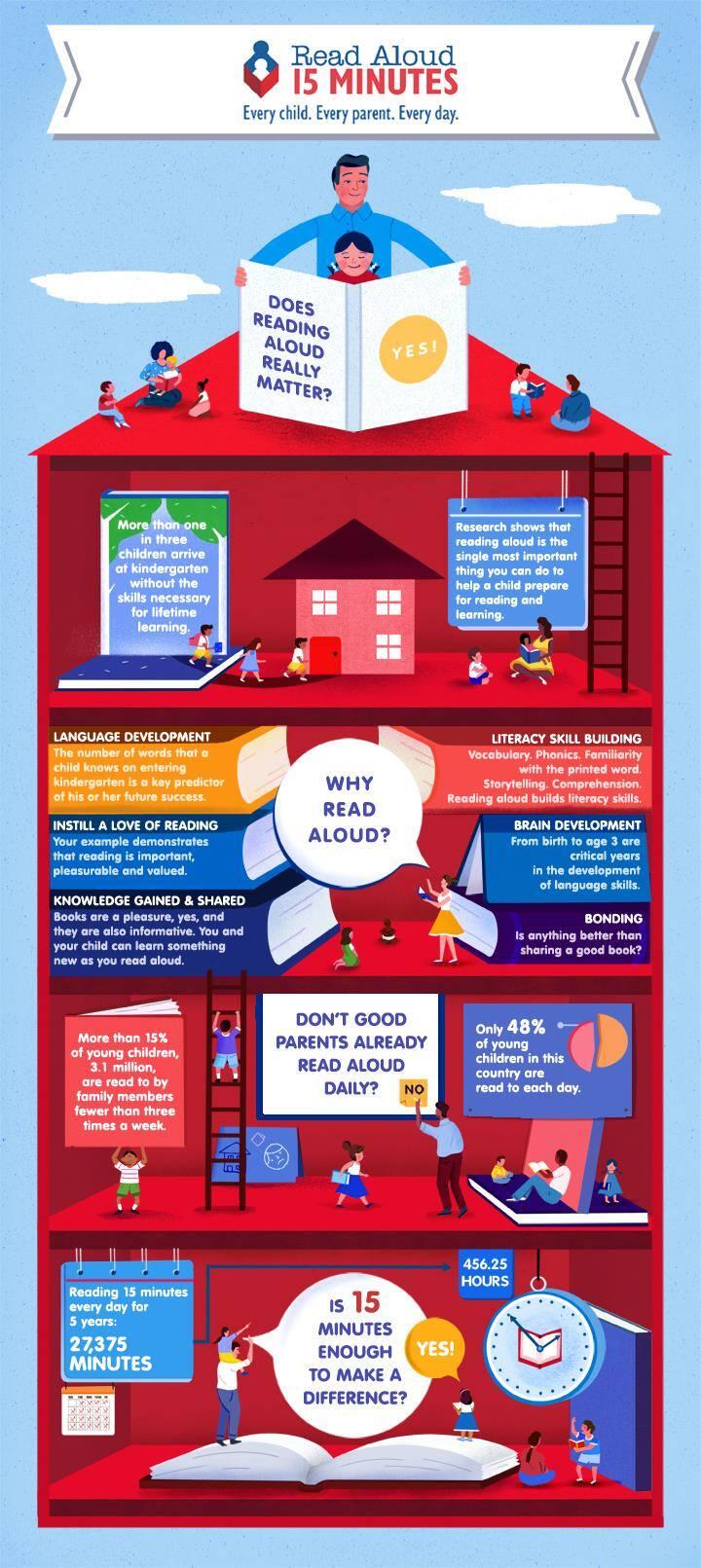
EVERY CHILD. EVERY PARENT. EVERY DAY.

DID YOUR CHILD MEET THE ADDISON FALL BREAK READING CHALLENGE? DON'T FORGET TO SIGN AND RETURN THE READING LOG FOR A SPECIAL REWARD TO BE PRESENTED BY MRS. HALLMARK AND MR. COHEN.
READERS ARE LEADERS!

Saturday, September 13, 2014

FALL BREAK IS IN VIEW!

Thank you all for making me feel so special! My birthday got off to a great start yesterday with all the beautiful cards, flowers, snacks, and gifts from my sweet thoughtful students! I appreciate each and every hug and wish. And we all get next week off to continue the celebration :) Enjoy Fall Break and some family fun!

When we return:
In Math, we will begin multiplication, so please have your kids brush up on multiplication facts 0-9. Try those great websites on the Math Practice page.

We will begin our Social Studies unit about America's first peoples as we concentrate on six Native American tribes: Inuit, Kwakiutl, Nez Perce, Hopi, Pawnee, and Seminole. We will learn about their cultures and the ways they lived in their various environments.

Weather will continue to be our focus of study in Science.

Please remind your girls and boys about Addison's Reading Challenge for Fall Break. Readers become Leaders!

Sunday, September 7, 2014

SOME THINGS ABOUT SEPTEMBER

It is hard to believe that we are half way through the first quarter of this school year. Progress reports, intended to give you a snapshot of how your child is progressing in fourth grade, will be going home on Thursday. Please keep in mind that these are preliminary grades and there is time for improvement before the first report card. 

SCHOOL PICTURES will be taken on Tuesday. All students will be photographed for the yearbook regardless of whether or not you order prints.

FALL BREAK is just around the corner! Enjoy time with your family September 15 - 19.


TAKE A PEEK AT NEXT WEEK:

MATH:  Addition and subtraction of large whole numbers will continue this week with special attention being given to regrouping. We are showing every step to avoid careless mistakes. We are applying our skills to solve word problems, being sure to label each number as we set up the problems on paper.                                                   In class, we enjoy our daily Number Talks. A Number Talk is a short, daily routine that provides students meaningful ongoing practice with computation. A Number Talk is a powerful tool for helping students develop computational fluency because the expectation is that they will use number relationships and the structures of numbers to add, subtract, multiply and divide. Parents, I encourage you to engage your children in number talks, too. For example, on shopping trips, have your child compare prices. If one pair of shoes costs $49 and another costs $35, ask him or her to use mental math to figure out how much would be saved by purchasing the less expensive pair of shoes. Then ask for an explanation of how the answer was found . . . there are multiples ways of thinking!

LANGUAGE ARTS:  During the month of September, we will be tackling the grammar concepts of subject/predicate, proper use of capitalization and punctuation, and skilled sentence and paragraph construction. We will be writing narrative and informational pieces, applying the grammar concepts we learn. We will work on organizing and developing our writing while adding descriptive details to support our main ideas and adding flavor to our work.

SCIENCE:  Mark Twain once said, “Climate is what you expect, weather is what you get.” Weather is the atmosphere at a given time and place.  Climate is the average weather of a particular region over a long period of time.  Meteorologists refer to climatic changes because of the current weather patterns. In order to make an educated forecast, meteorologists must understand the uses and operations of various weather instruments. Meteorologists not only predict the weather, but also help keep you informed.
Weather maps show information about fronts, temperatures, and precipitation in a certain area. Fronts are the moving boundaries between two air masses.  Air masses contain the same temperature and humidity throughout a specific section of the atmosphere.  These air masses create either cold or warm fronts.  Cold fronts push cold air out and under warm air creating a thunderstorm.  Warm fronts push warm air out and over cold air masses which create rain.  Weather maps indicate a number of atmospheric conditions ranging from types of precipitation to temperature to fronts.  
We have studied the water cycle and had lots of fun learning about types of clouds and how they are formed. Thanks go to Mrs. Hernandez, Mrs. Brown, and Mrs. Sivley for helping us in the Science Lab with our shaving cream clouds! Our Volunteers learned that learning can be very messy!
We are ready to investigate weather and learn how forecasts are made. By the time we finish our unit on weather,
STUDENTS WILL KNOW:
·                 thermometers measure temperature
·                 rain gauges measure the amount of precipitation
·                 barometers measure atmospheric pressure
·                 wind vanes measure wind direction
·                 anemometers measure the speed and force of the wind
STUDENTS WILL BE ABLE TO:
·                identify and use weather instruments
·                read a weather map
·                use data to predict weather patterns
·                differentiate between climate and weather
     
You and your child can access our textbook online to review or preview any of our units of study. Go to https://www-k6.thinkcentral.com/content/hsp/science/hspscience/ga/gr4/se_9780153734168_/flashNavhigh.html?page=toc


   SOCIAL STUDIES:  You and your child have access to our textbook online. This site provides many opportunities to practice vocabulary and work with interactive maps. Login to http://eduplace.com/eservices. Students’ username is… cobbstudent4 and the password is… password. 

READING:


Parent involvement in education is like the frosting on a cupcake, it makes it complete and oh so sweet!    
~ ~ Anonymous

Friday, August 29, 2014

LEARNING IS FUN!

Today was such a fun day! We boarded the bus this morning and headed to the Cobb Safety Village, a really neat replica of the Marietta Square, for a full day of learning. We were greeted by a firefighter/ instructor who led us through important safety lessons. We even practiced escaping from a burning home. I’m sure your child is anxious to tell you what he/she learned and about driving around “town” in his/her own car! We were very excited when Sparky came out to tell us goodbye! Next week we will review the Fire Safety workbook and will take a test on what we have learned.
Labor Day is Monday, September 1 and a school holiday. I trust that you all will have a chance to relax and enjoy time with your families over this three-day weekend.
September 9 is Picture Day at Addison! Smile!
WHAT’S AHEAD?
Math: We will work on increasing our accuracy of adding and subtracting whole numbers using the standard algorithm. We will also continue to work on rounding whole numbers so that we can estimate sums and differences. We are developing problem solving skills using real world situations. Please encourage your child to practice multiplication facts every night. I hope you are accessing some of the websites on this blog (Math Practice page). We will begin multiplication of whole numbers soon!
Science: We will investigate the weather and may even become expert meteorologists!We will make weather forecasts, observe weather patterns, create weather instruments, and conduct weather experiments. Next week we will visit the Science Lab to learn from some engaging hand-on activities.
Spelling: Sort 5 – Vowel pairs ai, ee, eain accented syllables.Has your child gone to Spelling City or any of the other websites on the Spelling Practice page?You will find some fun ways to study and reinforce good spelling habits.
Social Studies: We will be wrapping up our study of map and globes but will certainly put the skills to use throughout our study of American History this year.We will practice longitude and latitude next week and will be ready for an assessment to show that we know how to use maps!
Language Arts: Have you overheard your child singing the Noun Song? We have had a good review of nouns and will putting the apostrophe to work next week as we form singular and plural possessive nouns. We will also be working on verbs. They will love the Verb Song!
Writing:We will put our best pens forward as we try to “hook” our readers.We will be working on writing engaging openings to our paragraphs.
Reading:Next week we will focus on the differences between genres and story elements (settings, characters, events, and theme). As your child reads each night, ask him/her about the main idea of what he/she just read. Then ask about details that support that main idea.

Friday, August 22, 2014

TIME FLIES!


August is nearly over . . . . Time flies when we are learning! I am enjoying the time I spend with your children. They are showing a great deal of enthusiasm about learning and they’re doing a good job of following through with homework. Your support is appreciated. Thank you, too, for supporting our “Leader in Me” initiative and sending the forms back to school describing how your children are practicing the “Habits” at home.

DATES TO REMEMBER:
LABOR DAY – NO SCHOOL –SEPTEMBER 1
SCHOOL PICTURE DAY -- SEPTEMBER 9

So, what are we learning at 306 Listening Lane?

MATH: Students have shown a good understanding of place value and rounding numbers. We will be adding and subtracting some very large numbers next week. Our classroom “Number Talks” are helping students with basic facts while they exercise their mental math skills. This should transfer to more accurate computation with large numbers.

READING: Next week we will discuss story elements and focus on reading skills to help improve our overall comprehension. We will also be learning about asking questions during reading and making predictions. The students will also apply these reading skills as they read independently each day. Reading homework will reinforce reading skills. Having your child read each day’s passage aloud to you will help improve fluency.
What strategies can I use to help me better understand what I am reading?                    *Identifying main idea: determine what the passage is mainly about                                *Recognizing details: notice how the author supports the main idea with examples and descriptions                                                                                                                               *Understanding author's purpose: what was the reason the author wrote the passage? *Visualizing: make pictures or play a movie in your mind as you read                                  *Inferring: read “between the lines” – what can you assume?                                        *Questioning: what questions come to mind as you read the passage? What do you wonder?                                                                                                                                         *Connecting: relate characters, events, or information to yourself, another text, or the world                                                                                                                                                  *Predicting: what do you think will happen next?
PRACTICE “PREDICTING” AT THIS WEBSITE:
http://www.studyzone.org/testprep/ela4/o/makingpredictionsp.cfm

WRITING: We will begin discussing the elements of good writing and comparing our list to the 6+1 Traits of Good Writing. Next week we will review the writing process with an emphasis on prewriting and brainstorming great ideas. We will work at the art of writing.

This week teachers were informed that in Cobb County, Writing Craft will now account for 70% of the overall English Language Arts grade (previously, Writing was 50% of ELA). Spelling, grammar, and other word work will be 30% of the ELA grade.

SCIENCE: Water, water everywhere! Three fourths of our planet is covered with water but 97% of it is in the oceans. Most of the other 3% is frozen in glaciers. But we still have plenty to drink. In fact, did you know we drink the same water the dinosaurs drank? We currently have all of the water we have ever had on the earth. The water cycle is how water travels through evaporation, condensation, and precipitation. As the sun evaporates water (turning from liquid to gas) from lakes, rivers, and oceans, it condenses (gas changes to a liquid) toform clouds. Once the clouds are heavy, precipitation (water falls to return to  the ground) occurs. This process happens over and over. Our water continues to move through the same pattern over and over again.
This week we created our own water cycle models in the Science Lab. We appreciate Mrs. Brown and Mrs. Hernandez volunteering to assist us.
Next week we will learn about the role the weather cycle plays in our weather.

FIRE SAFETY: We welcomed a Cobb County firefighter to our classroom as we began to learn about safety and the importance of having a home escape plan. We took home our Fire Safety workbooks to draw a floor plan of our home (just the floor where we sleep) and a primary and a secondary escape route. We can really use parent help with this! We will have Fire Safety homework next week and will take a field trip to Safety Village on Friday. If your child plans to bring a lunch from home, please be sure that all packaging is disposable.
 
THANK YOU FOR ALL YOU DO TO SUPPORT YOUR CHILD’S LEARNING!

Monday, August 18, 2014

IN FULL SWING!

Parents, thank you so much for taking time to attend Open House last Thursday evening. I thoroughly enjoyed talking with you all. I trust that you gained some insight into our classroom and that you felt your time was well spent. I really had fun watching you all find your children at their seats! 

We are in full swing! The students have really been working hard and I am pleased that they have adjusted so well to fourth grade and our classroom! The only problem we have is that we all LOVE TO TALK!  Some of us are still working on knowing when it is and is not a good time to talk to our classmates.

IMPORTANT DATES TO REMEMBER:
Friday, August 29         Field trip to Cobb Safety Village  
Monday, September 1   Labor Day - No School!
Tuesday, September 9   School Picture Day    
                        PREPAY ORDER FORMS COMING SOON!

What are your  Gators doing at school?
MATH:  Friday, we will have our first test, assessing what we have learned about place value and our base ten number system, rounding, comparing, and ordering numbers. We will continue to practice reading large numbers with fluency. Next week we will add and subtract large numbers so students need to brush up on basic addition and subtraction facts. 
ALL MY STUDENTS NEED TO BE PRACTICING MULTIPLICATION FACTS EVERY NIGHT!  I HAVE ADDED TWO NEW LINKS TO THE TOP OF MY MATH PRACTICE PAGE. PLEASE CHECK THEM OUT!

SCIENCE:  We are learning about the water cycle and will be applying those concepts to our study of weather.  Check out the page on this blog titled "Water Cycle on the Web" for a wide variety of information sources, activities, and games.

SOCIAL STUDIES: We will explore the United States as we review map skills. We are creating maps showing some major physical features of the United States including the Atlantic Coastal Plain, the Great Plains, the Continental Divide, the Great Basin, Death Valley, the Gulf of Mexico, the St. Lawrence River, and the Great Lakes. 

HEALTH:  This Friday we will be instructed by a Cobb County firefighter or police officer. Students will learn the importance of having a home escape plan. Thank you, parents, for helping your children draw floor plans and determine escape routes in their workbooks. Students will have Fire Safety homework next week:  reading passages and quizzes in preparation for our field trip on Friday, August 29 to the Cobb Safety Village.  We are excited about all the fun activities we will experience while we learn to put safety first!  Students will be tested on what they learn. 

SPELLING:  Sort 3.  In class, we are learning about vowel sounds and syllables (where and why words are divided into syllables). Spelling homework is designed to help us practice and remember spelling patterns. There are several websites on my Spelling Practice page to help your children become better spellers.

READING:  We have focused on Reading standards that include identifying main idea, details, text structure, and vocabulary. We are reading The Lemonade War by Jacqueline Davies and are enjoying an entertaining story while learning some economic concepts and examining the writer's craft. She uses lots of idioms and is so descriptive that we are able to "see a movie in our heads" as we read.  Several students are looking for other books by this author! Students are getting into the habit of recording their nightly 20 minutes of reading in their agendas (title and pages read). Thank you for your help in reminding them.

Thank you for supporting your child and signing his/her agenda each night.